In this guide
It usually shows up on the same stretch of road every day. You roll over a speed hump in your neighborhood, drop out of a parking lot driveway, or hit one of the rough patches on 880, and there's a clunk from somewhere under the car. Nothing feels wrong when you drive on, so it's easy to turn the radio up and forget about it until the next bump.
A clunk over bumps is one of the most common suspension complaints we hear from drivers in Fremont, Newark, Union City, Hayward and San Jose. The good news is that the sound itself, and when it happens, tells you a lot about which part is worn.

Why worn suspension parts make a clunk
Your suspension is a set of arms, joints, springs and dampers that let each wheel move up and down while keeping it pointed where it should be. Most of the joints are cushioned with rubber bushings or packed ball-and-socket joints, so when they're healthy everything moves without slop or noise.
As those parts wear, small gaps open up. On a smooth road you won't notice. Hit a bump and the wheel moves suddenly, the loose part shifts across that gap, and metal meets metal. That's the clunk. The gap grows with every mile, which is why the noise tends to get louder and more frequent over time.
The usual causes
A few parts account for most of the clunks we track down:
- Sway bar links. These short links connect the sway bar (the bar that keeps the car from leaning in turns) to the suspension. They're small, they take a beating, and they're one of the most common sources of a clunk. The sound is usually a lighter knock or rattle over small, uneven bumps, often worse when only one side of the car hits the bump.
- Struts, shocks and strut mounts. Struts and shocks control how the car moves after a bump. When they wear out, the car can bounce, float on dips, or bottom out with a heavy thud. A worn strut mount at the top of the strut can clunk over bumps and also make a knock or creak when you turn the steering wheel in a parking lot.
- Ball joints. Ball joints are the pivots that connect the control arms to the steering knuckle, so the wheel can move up and down and steer at the same time. A worn ball joint often clunks over bumps and when you turn or brake, and the steering can start to feel loose or wander on the freeway.
- Control arm bushings. The rubber bushings where the control arms bolt to the car eventually crack and soften. Worn bushings tend to make a dull clunk when you brake, accelerate or go over a bump, and can make the car feel less settled.
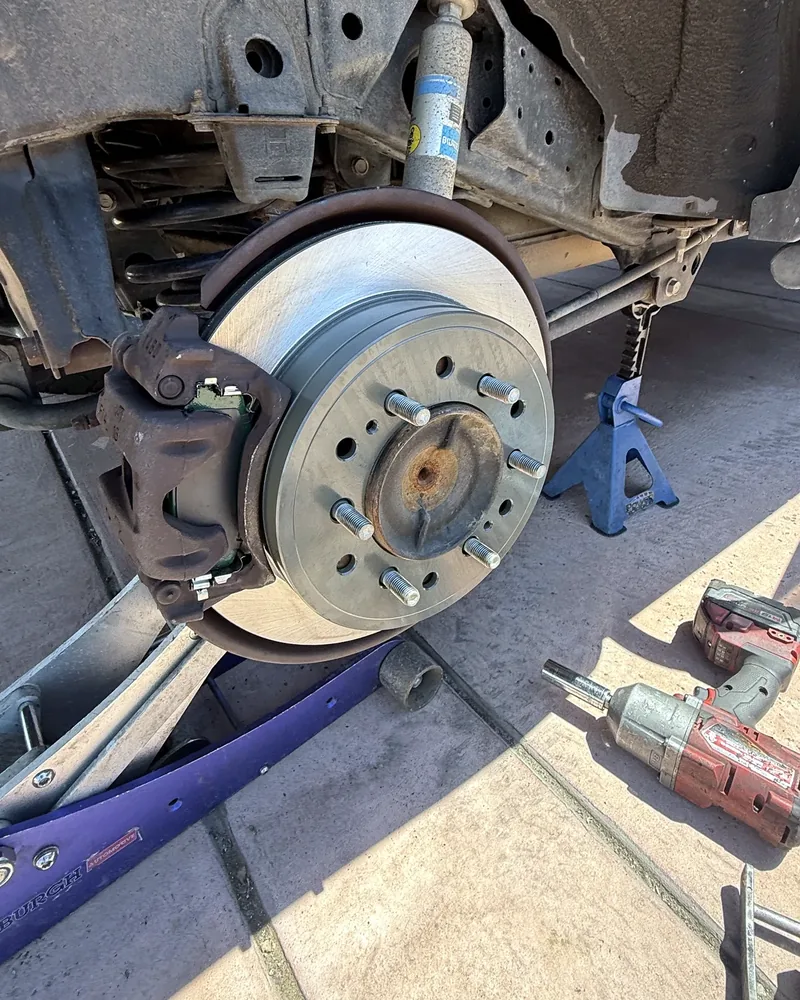
Tie rod ends, which link the steering to the wheels, can also knock when they wear, usually along with loose or vague steering. We check them during every front-end inspection.
Matching the sound to the part
You can help narrow it down before anyone looks at the car. On your next drive, on a quiet street with no one close behind you, pay attention to when the noise happens:
- A light knock or rattle over small, choppy bumps. Often sway bar links.
- A heavy thud on bigger dips, and the car keeps bouncing afterward. Points to worn struts or shocks.
- A clunk or creak when you turn the wheel at low speed, like pulling into a parking spot. Think strut mounts, or sometimes ball joints.
- A clunk when you brake or pull away from a stop. Often control arm bushings or ball joints.
- A clunk plus steering that feels loose or wanders. Ball joints or tie rod ends. Get this one checked soon.
Make a note of which corner the noise seems to come from, what kind of bump sets it off, and whether it happens when you turn or brake. It helps a lot when you request a visit. That said, these are only clues. Two worn parts can sound like one, and the noise can travel through the body so it seems to come from the wrong side. A hands-on inspection is what settles it.
Clunks that aren't the suspension
Not every clunk over bumps is a suspension part. Before you assume the worst, a few simpler things are worth ruling out:
- Something loose in the car. A jack, a tool bag or sports gear sliding around in the trunk can sound surprisingly mechanical. Empty the trunk and check the spare tire area first.
- Exhaust or heat shields. A loose heat shield or a broken exhaust hanger usually makes more of a tinny rattle or a bang under the middle of the car.
- Brake parts. A loose caliper or missing pad hardware can knock over bumps. If you've also noticed a shake when you brake, our guide on a steering wheel that shakes when braking explains how worn front-end parts and brake problems can show up together.
Why it matters for safety, not just comfort
It's tempting to file a clunk under “annoying, not urgent.” Sometimes that's fair. A worn sway bar link is mostly a noise, and the car can usually be driven while you plan the repair. But some of the parts behind that clunk do a lot more than keep the ride quiet:
- Ball joints hold the wheel in place. A badly worn ball joint can separate, and when that happens the wheel can fold under the car and you lose steering on that corner. That's rare, but it's the reason a clunk with loose steering should never wait.
- Struts and shocks keep the tires on the road. Worn ones let the tires skip and bounce over rough pavement, which means less grip when you brake hard or swerve, and the car can nose-dive more under braking.
- Loose parts wear out other parts. Slop in the front end speeds up tire wear and can make a small brake shake feel much worse.
Get it checked soon if the noise is getting louder, the steering feels loose or the car wanders, the car pulls to one side, or you notice uneven wear on the inside or outside edge of a front tire. If you hear a loud bang and the steering suddenly feels different, pull over safely and don't keep driving. That's one advantage of a mobile mechanic: we come to the car, so you don't have to drive it anywhere.
Suspension diagnosis and repair where the car is parked
Stewart Mobile Repair comes to your driveway, office lot, or another safe, level parking spot. For a clunk over bumps, we raise the car safely, check the sway bar links, struts, shocks and mounts, ball joints, control arm bushings and tie rod ends for play and wear, and look at the tires for wear patterns that point to a problem. Then we explain what we found and what we recommend, in plain language.
Our mobile suspension repair covers struts, shocks, control arms, ball joints, bushings and sway bar links, and in many cases the repair can be done at your location when the vehicle and work area are suitable. Pricing depends on the vehicle and what the inspection shows, so contact us for pricing. Parts and labor are quoted before any approved work begins, and we use OEM-quality or premium parts.
A few things we'll be upfront about. We don't do alignments or tire work. Replacing struts, control arms or other steering and suspension parts often calls for an alignment afterward, so we'll tell you when to book one at an alignment shop. We also don't work on diesels, EVs, or vehicles from 1993 and earlier, and we don't do oil changes or smog checks. Our page on services we don't offer has the details.
Hearing a clunk on a test drive of a used car? Our guide to getting a private-seller car inspected explains how to have it checked before you buy.
We do mobile suspension work across the East Bay and South Bay, including Fremont, Newark, Union City, Hayward and San Jose, plus Milpitas, San Leandro, Santa Clara, Sunnyvale and the Tri-Valley. Check our service area for the full list.
We are ASE-certified, BAR-licensed, and fully insured, and eligible repairs are backed by a 12-month / 12,000-mile warranty on parts and labor. Review the warranty terms for details.
You can also call or text (650) 660-6305 and tell us what you hear and when it happens.